What is sciatica ?
Sciatica is one of the most common reasons people seek treatments like osteopathy, physiotherapy, or other manual therapies. While many are familiar with the term and have a general understanding of the symptoms, what exactly is sciatica?
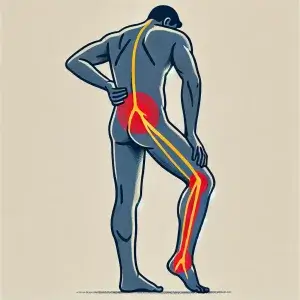 To understand sciatica, it’s helpful to break down the name itself, as it provides a key clue. Throughout our bodies, we have many nerves that play vital roles in sending information to and from the brain. Sensory nerves relay signals such as temperature, pressure, and position. while motor nerves send commands from the brain to the muscles, allowing us to move.
One of the largest nerves in the body is the sciatic nerve, which originates in the lower back. This nerve branches out from the spine, travels through the buttocks, down the leg, and extends all the way to the foot. We have two sciatic nerves, one for each leg. When someone experiences sciatica, it means this nerve is being irritated or compressed, leading to a disruption in the signals it sends between the body and the brain.
The symptoms of sciatica can vary widely, depending on the extent and location of the irritation. Some common sensations include sharp, shooting pains that radiate from the lower back down the leg, burning or tingling feelings, and even numbness. These symptoms can be felt anywhere along the path of the sciatic nerve, from the lower back to the foot.
So, what causes this irritation of the sciatic nerve? There are several common reasons:
- Disc Issues: The spine is made up of vertebrae, with discs acting as cushions between them. Sometimes, these discs can bulge or herniate, meaning part of the disc pushes out of its normal space. When this happens near the lower spine, it can press against or irritate the sciatic nerve as it exits the spinal column. This compression can cause symptoms to appear either at the site of the issue or further down the leg.
- Muscular Issues: The sciatic nerve has to travel through various muscles on its journey down the leg, including the piriformis muscle in the buttock. If muscles become tight, inflamed, or dysfunctional, they can press on the nerve, leading to irritation. The nerve needs to glide smoothly through the tissues around it, and any restriction or friction along the way can trigger a flare-up of pain or discomfort.
- Spinal Degeneration: In some cases, conditions like spinal stenosis (narrowing of the spinal canal) or degenerative disc disease can cause the spaces where the nerve passes to shrink, leading to nerve compression.
What Can Be Done?
Fortunately, sciatica is often highly treatable, and surgery is not usually required. Osteopathy, physiotherapy, and other forms of manual therapy can provide significant relief by addressing the underlying causes of the nerve irritation.
- Disc-Related Sciatica: When bulging discs are the cause, specific osteopathic techniques can be used to help relieve pressure on the affected disc, allowing it to heal. Reducing inflammation and calming muscle guarding—the body’s protective tightening of muscles in response to pain (often felt as spasming and tightness ) are key components of treatment.
- Muscle Restrictions: If the problem stems from muscle tightness or dysfunction, osteopaths can work on releasing tension and restoring normal function to the muscles, allowing the sciatic nerve to glide smoothly through its surrounding tissues again.
- Restoring Balance and Mobility: Osteopaths focus on ensuring the entire musculoskeletal system is balanced, and that joints and muscles are functioning optimally. This approach helps reduce the likelihood of future flare-ups by addressing the root causes of the issue.
In many cases, sciatica can be resolved or significantly improved with non-invasive therapies, and patients can return to their normal activities without the need for surgical intervention. The key is identifying the specific cause of the nerve irritation and addressing it effectively.